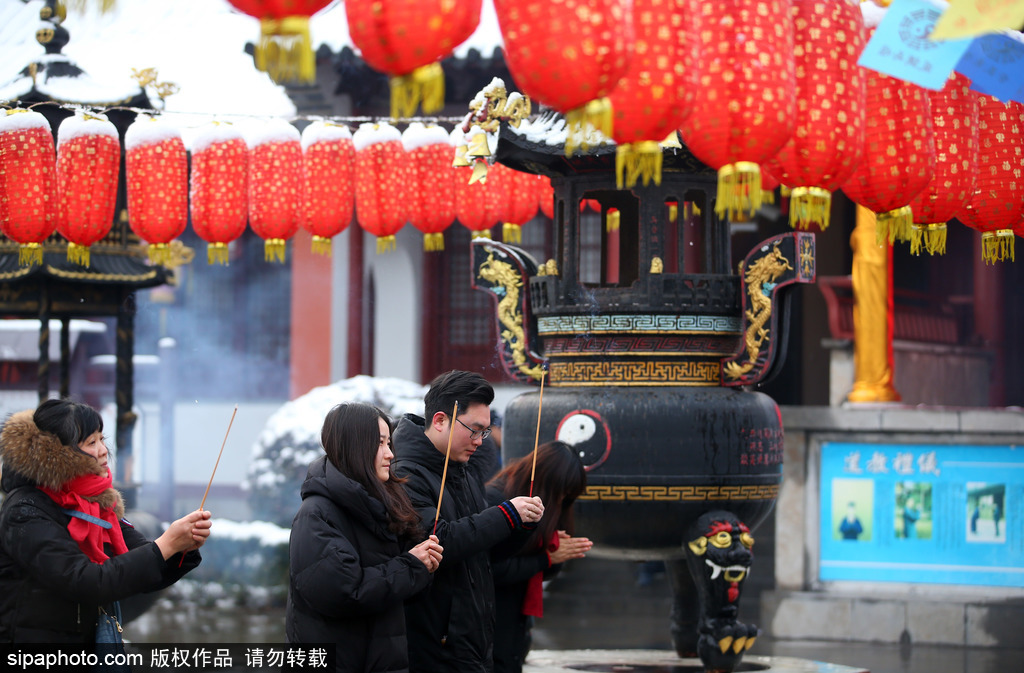
City God Temple in Nantong, Jiangsu
Overview
The City God Temple, known as Chenghuangmiao, in Nantong, Jiangsu province is an iconic Taoist temple. It stands as a significant historical and cultural monument, representing the spiritual and communal life of the local populace over centuries. As a major religious and cultural center, the City God Temple is dedicated to the veneration of the City God, a deity believed to protect the city and its inhabitants, ensuring prosperity and peace.
Historical Background
The origins of the City God Temple in Nantong date back to the Song Dynasty (960-1279). It was constructed in 961 by Wang Mao, the prefecture magistrate during the Jianlong period. Over the centuries, the temple has undergone numerous renovations and reconstructions, reflecting the evolving architectural styles and cultural influences of different eras. Initially located on the southeast side of the prefectural office on Shizi Street, the temple was later relocated and rebuilt in the north of Haodong Green Garden, covering an extensive area of approximately 6,666.67 square meters.
Architectural Significance
The City God Temple is a one-storey masonry-timber construction, showcasing the exquisite craftsmanship and traditional architectural design of ancient China. The temple complex includes a variety of halls and structures crafted in the traditional style, such as the rebuilt gate of ceremony, corridor, prayer hall, main hall, yuanchen hall, wealth God temple and east and west aisles. Additional elements include a newly added main gate, stage, rear hall, Wenchang hall, hall of the king of medicine, wing-rooms and corridors. This blend of historical and modern additions creates a rich tapestry of cultural heritage that continues to draw visitors and worshippers alike.
Cultural and Religious Importance
The City God Temple holds a vital place in the cultural and religious fabric of Nantong and its surrounding regions. It serves as a focal point for various traditional Chinese festivities and rituals, particularly during the Lantern Festival, when locals and tourists converge to pray for good fortune and participate in time-honored activities such as viewing lanterns and solving lantern riddles. This temple is not only a place of worship but also a center for community gatherings, fostering a sense of continuity and belonging among its visitors.
Modern Relevance and Tourism
The City God Temple remains a prominent tourist attraction, offering an immersive cultural experience. It is part of a broader network of cultural and historical sites in Nantong, including the Haohe River Scenic Area, which provides visitors with opportunities to explore the rich history and natural beauty of the region through travel routes and cultural experiences such as tea ceremonies, guqin performances and handicrafts. Article reference1. Nantong Chenghuang miao. en.nantong.gov.cn. 20182. Chenghuangmiao temple opens doors for Lantern Festival. en.nantong.gov.cn. 2019Photo Gallery(1 picture)CategoriesCultural HeritageTagHistorical BuildingTangible Cultural HeritageCity TourismCatalogue1. Overview2. Historical Background3. Architectural Significance4. Cultural and Religious Importance5. Modern Relevance and Tourism- - - []








